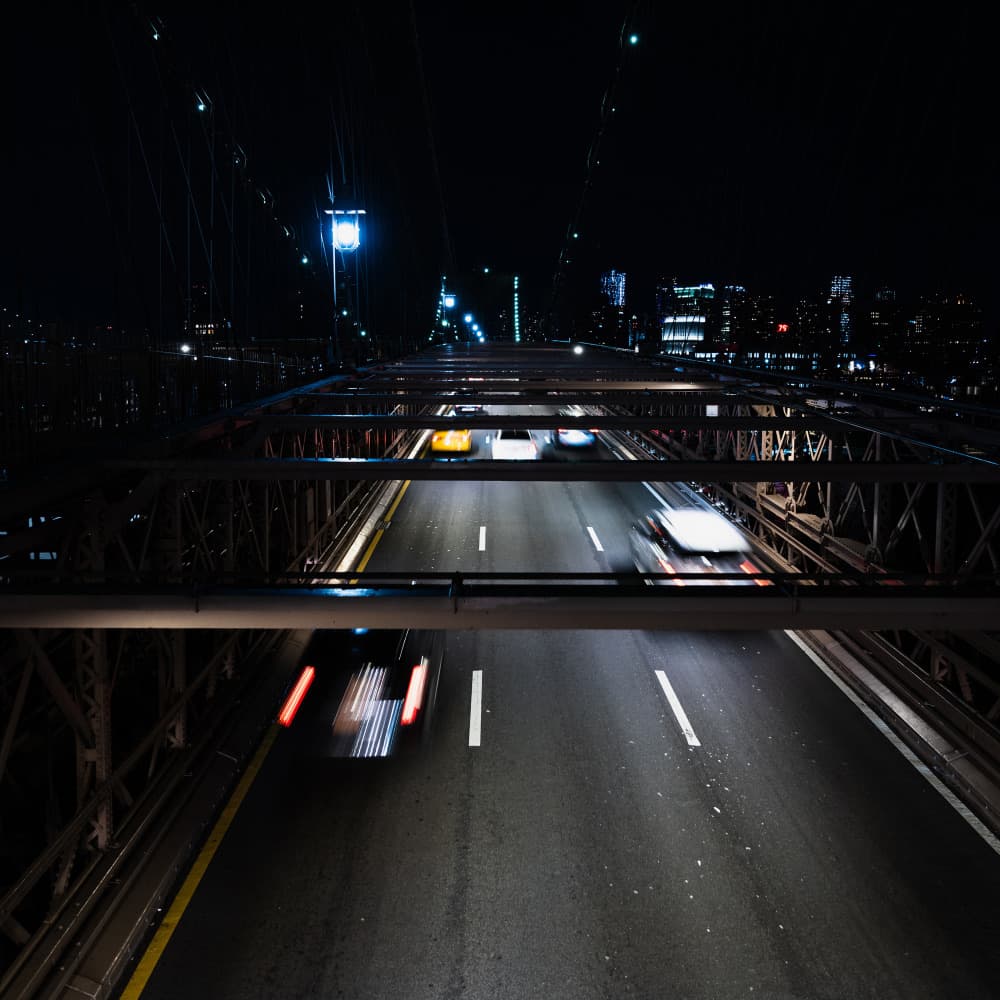
Clocks fall back at 2 a.m. on Sunday, in the middle of Halloween night. Here is what the darker commute means for drivers, and a six-step checklist for the weekend.
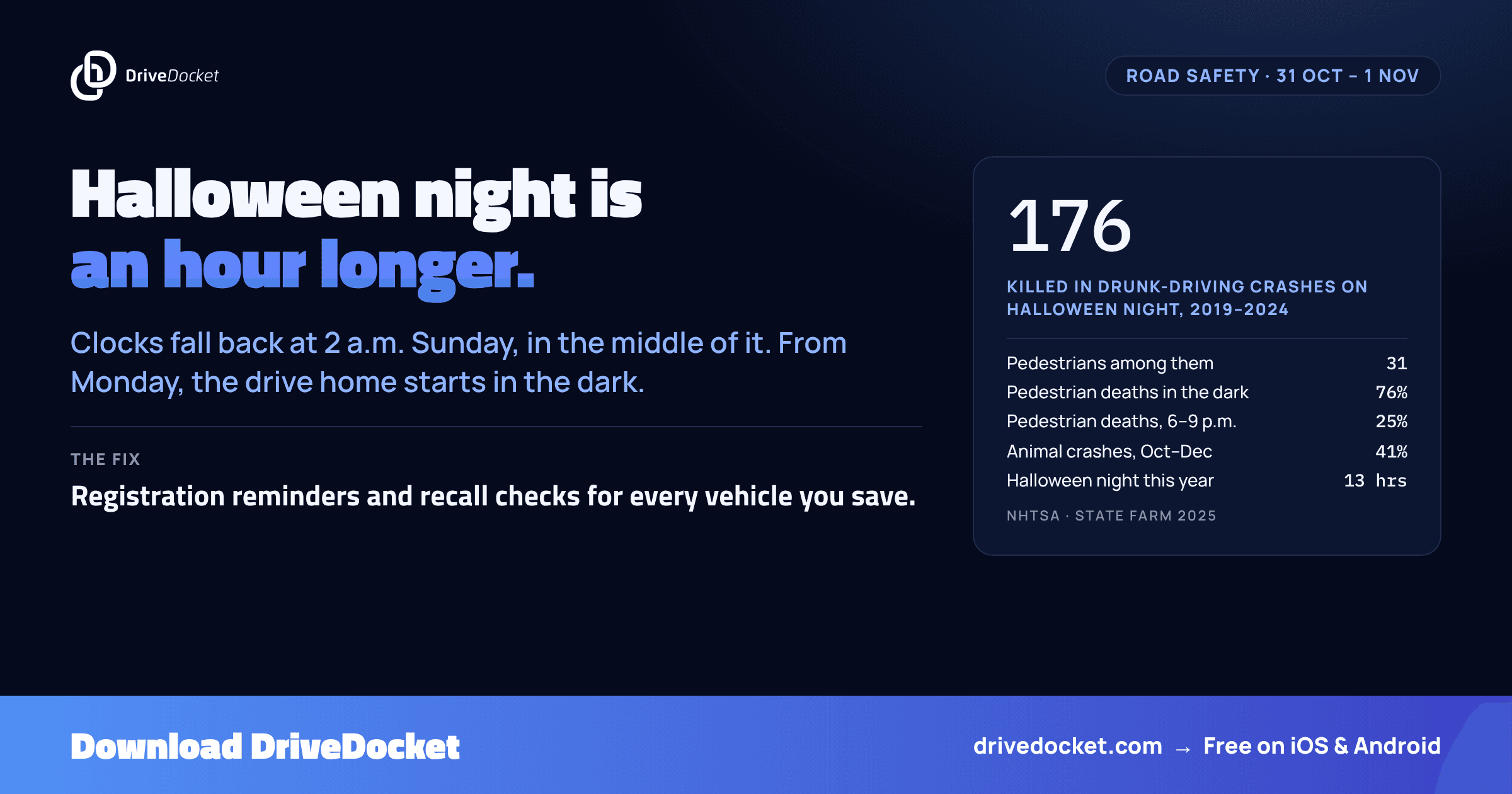
Saturday is Halloween. At 2 a.m. on Sunday, the clocks fall back an hour. That means the most dangerous night of the year for people on foot gets an extra hour of darkness, and from Monday the drive home starts in the dark. Here is what changes and what to do before the weekend.
Driver Snapshot Read
▪ Clocks fall back at 2 a.m. on Sunday, 1 November. Sunset moves about an hour earlier, so most evening commutes now end in the dark.
▪ From 2019 to 2024, 176 people were killed on Halloween night in crashes involving a drunk driver, 31 of them pedestrians (NHTSA).
▪ About three in four pedestrian deaths happen in the dark, and one in four between 6 p.m. and 9 p.m. (research cited by NHTSA).
▪ October to December is deer season: about 650,000 animal-collision claims, 41% of the yearly total (State Farm).
▪ Before Monday: clean your headlights, check your registration renewal date, and run a free recall check on your VIN.
Why this weekend matters
Two things are happening at once this year. Halloween falls on a Saturday, when more children are out later and more adults are at parties. Then, in the middle of that same night, the clocks go back.
NHTSA defines Halloween night as 6 p.m. on 31 October to 5:59 a.m. on 1 November. This year that window lasts 13 hours instead of 12. Every hour of it is dark.
The Stats
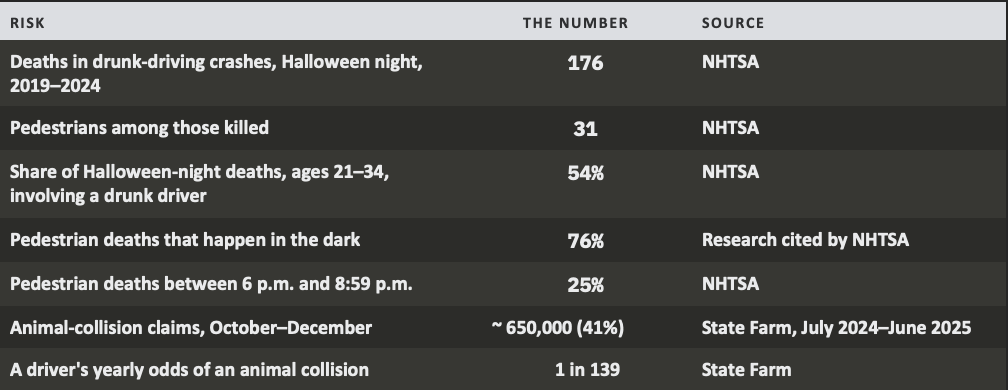
Safe Kids Worldwide adds one more: children are more than twice as likely to be struck and killed by a vehicle on Halloween than on any other day of the year.
The first dark commute is the hardest
The week after the clocks change is when drivers are least used to it. The light that showed you the crosswalk at 6 p.m. last week is gone. Pedestrians in dark coats blend into wet roads. Headlights that have yellowed over the years throw less light than you think.
Sleep is the other factor. The fall change gives you an hour, but many people spend it staying up later. Research from the AAA Foundation for Traffic Safety found that missing just one to two hours of sleep can nearly double a driver's crash risk.
Who should read this twice: drivers over 55, whose eyes need more light at night; parents doing a school run that now ends at dusk; and anyone who drives for work after 5 p.m.
Deer don't know about daylight saving
Deer move most at dawn and dusk. After Sunday, dusk lands right on top of rush hour. State Farm estimates drivers filed 1.7 million animal-collision claims in the year to June 2025, more than 1.1 million involving deer. West Virginia tops its list of the riskiest states.
If a deer runs out, brake firmly and stay in your lane. Swerving is how a hit becomes a rollover. Where you see one, expect more behind it.
Your weekend checklist
A. Clean your headlights and check both work. Hazy lenses cut the light you get. A restoration kit costs less than a ticket for a dead bulb.
B. Set your car clock. Most phones update themselves. Many dashboards do not.
C. Plan the ride home before Saturday's party. Book the rideshare or name the driver before the first drink.
D. Slow down in neighborhoods from 5 p.m. to 10 p.m. on Saturday. Children cross mid-block and between parked cars.
E. Check your registration date. November and December renewals are easy to lose in the holiday rush. In Texas, for example, you have five working days after expiry before you can be ticketed, with fines of up to $200.
F. Run a recall check. Enter your vehicle information. It is free and takes two minutes. This week alone brought two Do Not Drive orders; see our Vehicle Recall Checker or Download DriveDocket at drivedocket.com. Free on iOS and Android.
DriveDocket keeps your deadlines in one place. It reminds you before your registration expires and checks every saved vehicle against NHTSA's public recall data, so you are not relying on a letter in the mail.
Download DriveDocket at drivedocket.com. Free on iOS and Android.
Frequently asked questions
When does daylight saving time end in 2026? At 2 a.m. local time on Sunday, 1 November 2026. Clocks go back to 1 a.m.
Is driving more dangerous after the clocks change? The evening commute moves into darkness, which is when most pedestrian deaths happen. About 76% of pedestrian deaths occur in the dark, according to research cited by NHTSA.
Why is Halloween dangerous for drivers? More people are on foot after dark, including children, and more drivers are impaired. From 2019 to 2024, 176 people died on Halloween night in crashes involving a drunk driver.
When are deer collisions most likely? October, November and December account for about 41% of animal-collision claims, according to State Farm. Deer are most active at dawn and dusk.
Does my car clock change automatically? Phones usually do. Many car clocks do not, so set it by hand.
Sources
▪ NHTSA Traffic Safety Marketing, Halloween: Halloween night deaths, 2019–2024; definition of Halloween night.
▪ NHTSA, pedestrian safety: share of pedestrian deaths in the dark and by time of day.
▪ State Farm newsroom, 16 SEP 2025: animal-collision claims, October–December share, national odds, top state.
▪ FOX 29, 2026: date and time daylight saving time ends.
▪ AAA South Jersey, drowsy driving and the time change: AAA Foundation sleep and crash-risk research.
▪ Nexstar via Yahoo News, Halloween night safety: Safe Kids Worldwide figure.
▪ Yahoo Autos / Austin American-Statesman, 01 APR 2026: Texas grace period and fines.
Add a vehicle, upload a document, and let DriveDocket keep track of the dates that cost money when they slip.
Passwordless sign-in. Data encryption. Delete everything whenever you want.